Skip to content
HC Air Conditioning

Guide

Types of air conditioning for homes

A quick guide from HC Air Conditioning in Bolney to the main types of home air conditioning, and which rooms each one suits.

Choosing the right system

Every fixed system works the same way: an indoor unit cools the room's air, an outdoor unit gets rid of the heat, and insulated pipes join the two. What changes is where the indoor unit sits and how much of it you see.

The right one depends on the room: its size and shape, where the outside walls are, and how much you mind seeing the unit. Most homes choose a wall-mounted split, but loft rooms, open-plan spaces and renovations can suit something else.

Not sure? Send an enquiry and we'll tell you what would work in your home.

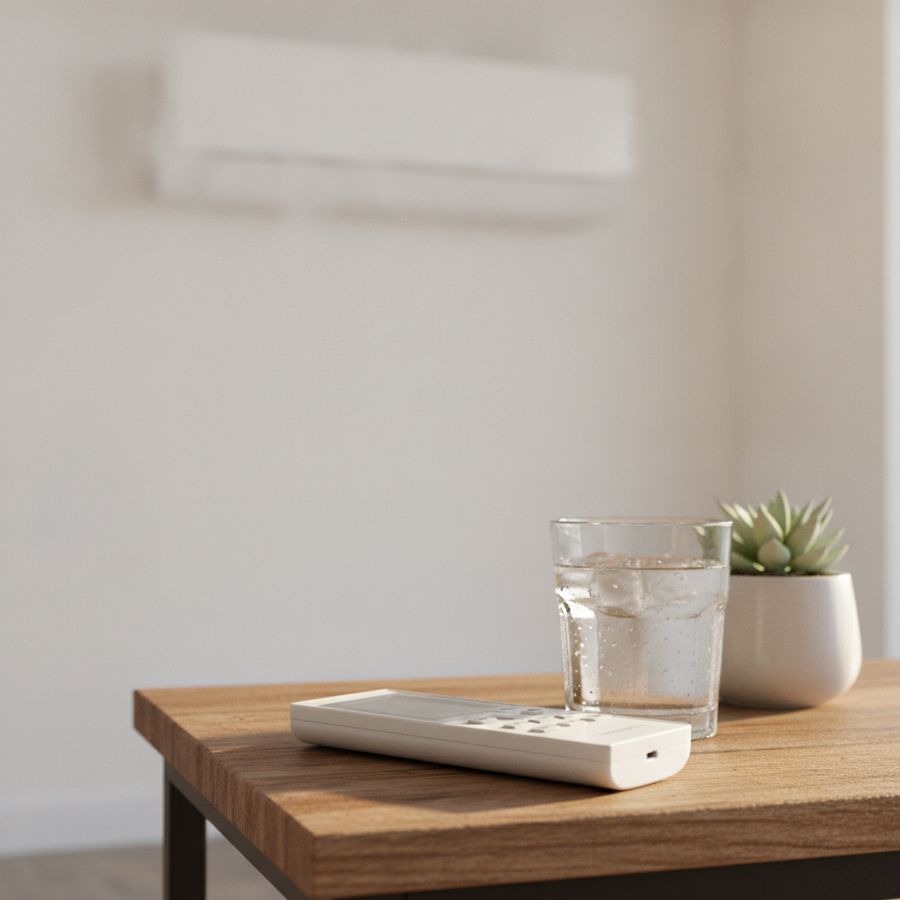
An air conditioning remote control on a wooden side table beside a glass of iced water

The main types, compared

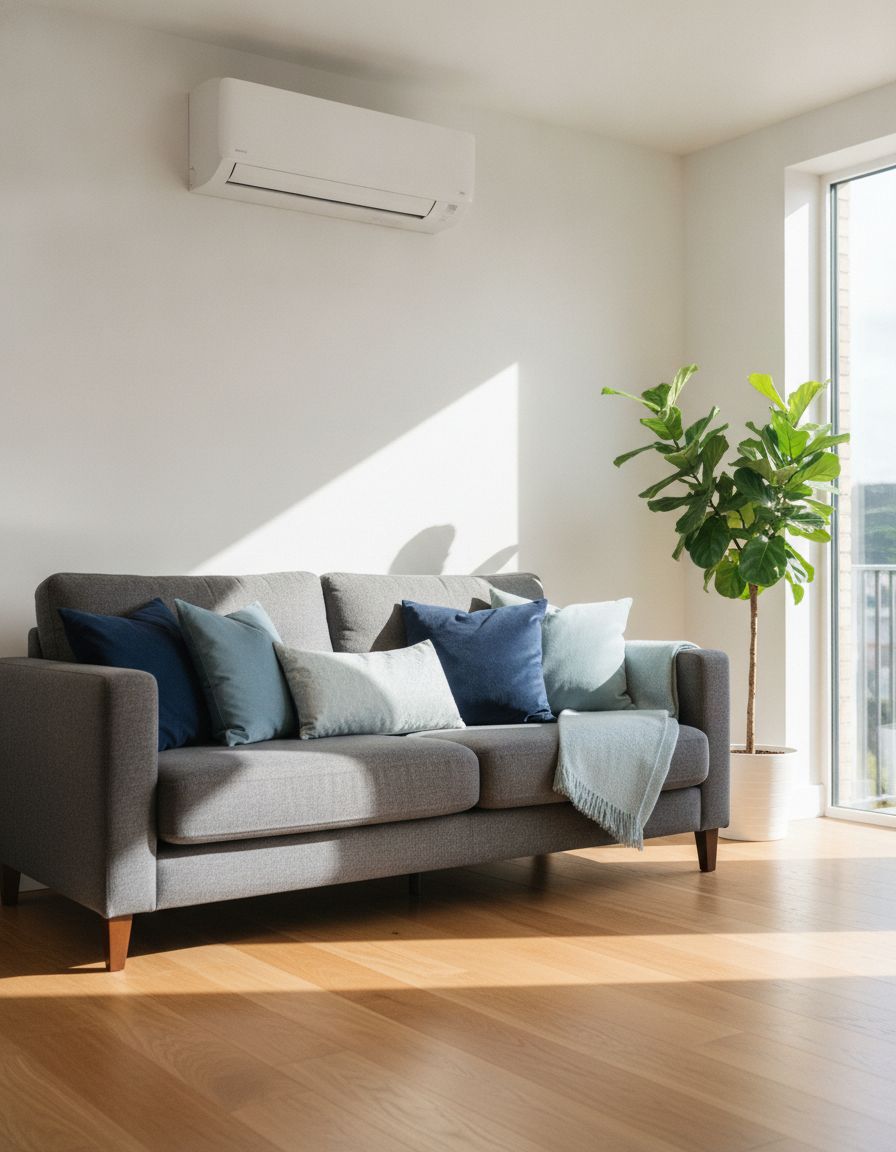
A white wall-mounted air conditioning unit above a sofa in a bright living room

Wall-mounted split

One indoor unit fixed high on a wall, joined by insulated pipework through the wall to one outdoor unit. It is the most common choice for homes in the UK.

Suits
Bedrooms, living rooms and home offices with an outside wall.
Worth knowing
The simplest and usually the least disruptive to install, especially when the indoor unit sits on an outside wall.
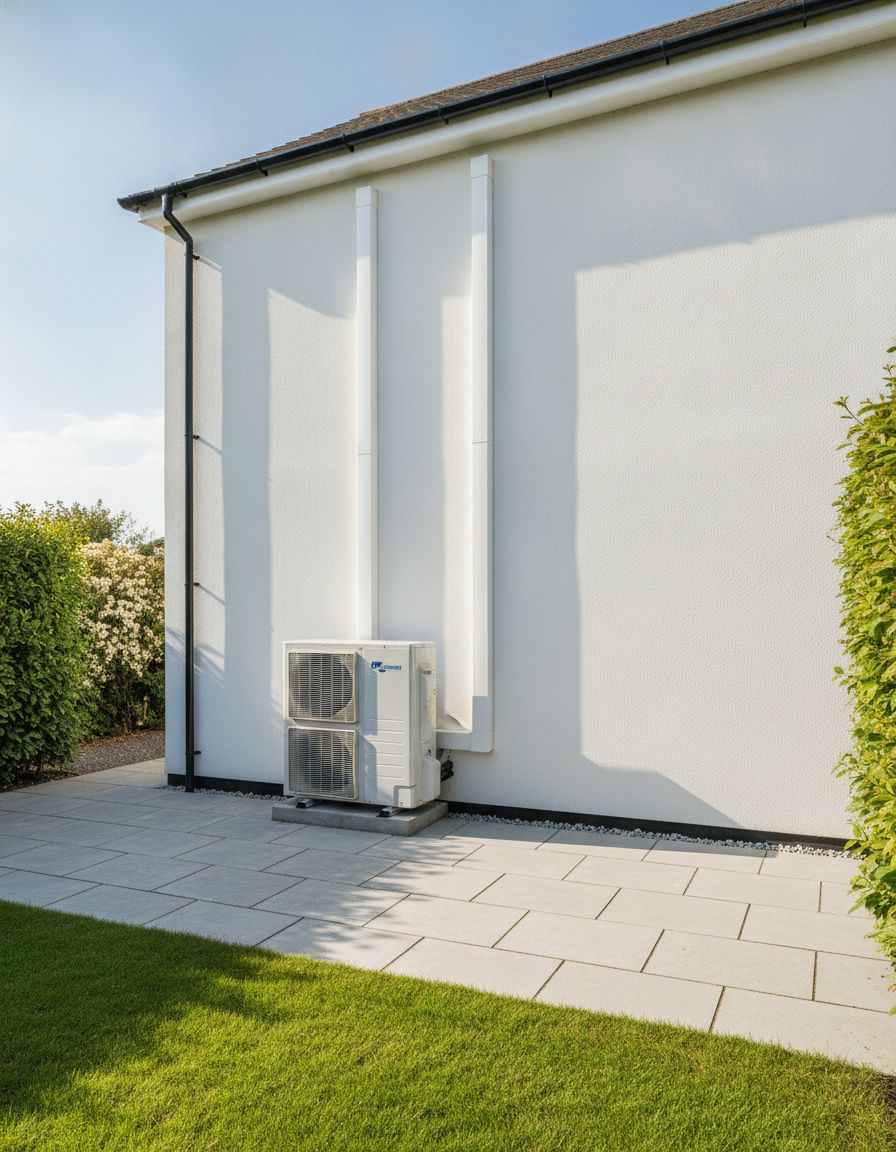
A multi-split air conditioning outdoor unit beside a patio, with trunking up the wall to the rooms above

Multi-split

Two or more indoor units connected to a single outdoor unit, each with its own controls so rooms can be set to different temperatures.

Suits
Homes that want two to several rooms cooled without a row of outdoor units on the wall.
Worth knowing
The outdoor unit is larger, and the pipe runs to each room need planning together.
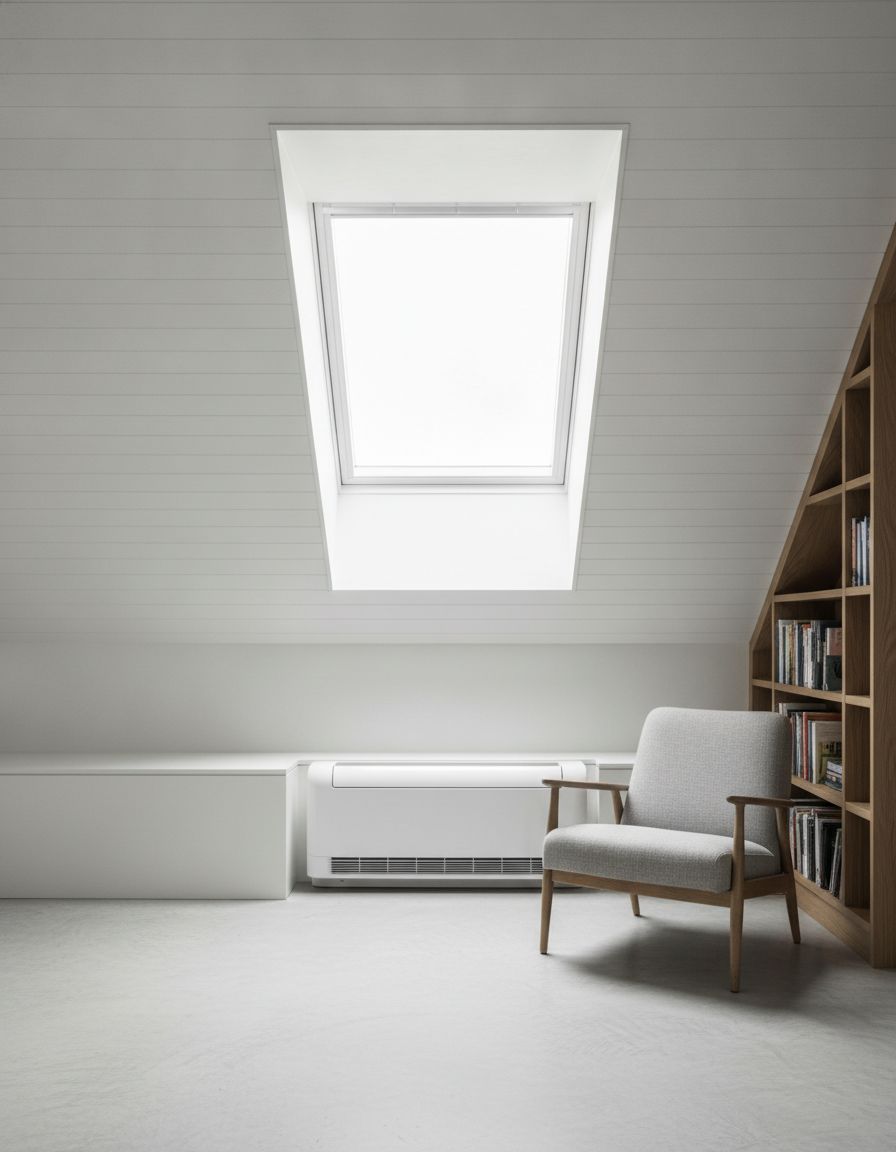
A loft room under a sloping ceiling with a floor console air conditioning unit against the low wall

Floor console

An indoor unit that sits low on the wall, about the size of a small radiator, blowing air up and out into the room.

Suits
Loft rooms with sloping ceilings, and rooms where there is no space high on a wall.
Worth knowing
It takes some floor-level wall space, so think about furniture placement.
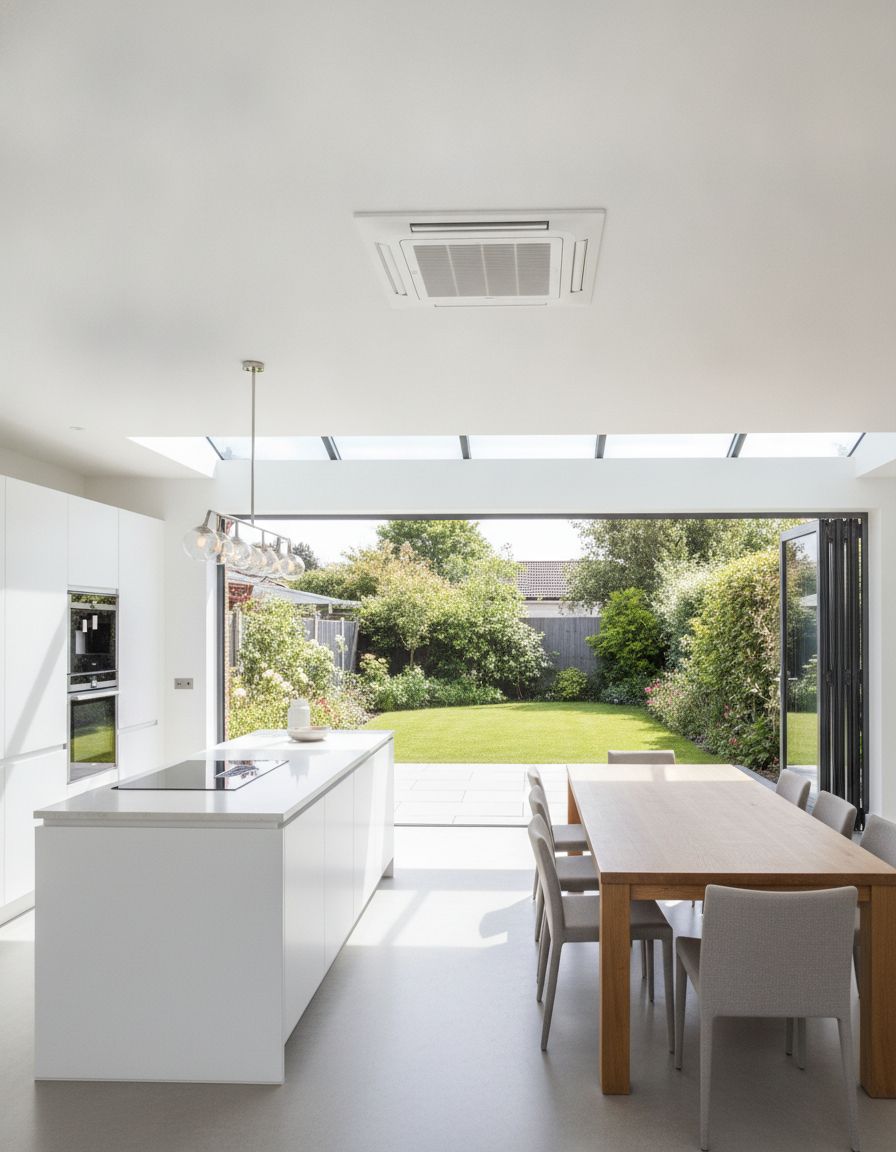
An open-plan kitchen diner with a ceiling cassette air conditioning unit above the dining table

Ceiling cassette

An indoor unit set into the ceiling, with a square grille that spreads air in several directions.

Suits
Larger open-plan spaces and rooms with a suspended ceiling or space above.
Worth knowing
It needs a ceiling void or loft above for the unit and the pipework, so it suits some homes better than others.

Ducted

The indoor unit is hidden in a loft or ceiling void, with ducts carrying air to slim grilles in one or more rooms.

Suits
Homes where you want almost nothing on show, often planned as part of a renovation or extension.
Worth knowing
It is the most involved to install and works best planned in before ceilings are finished.
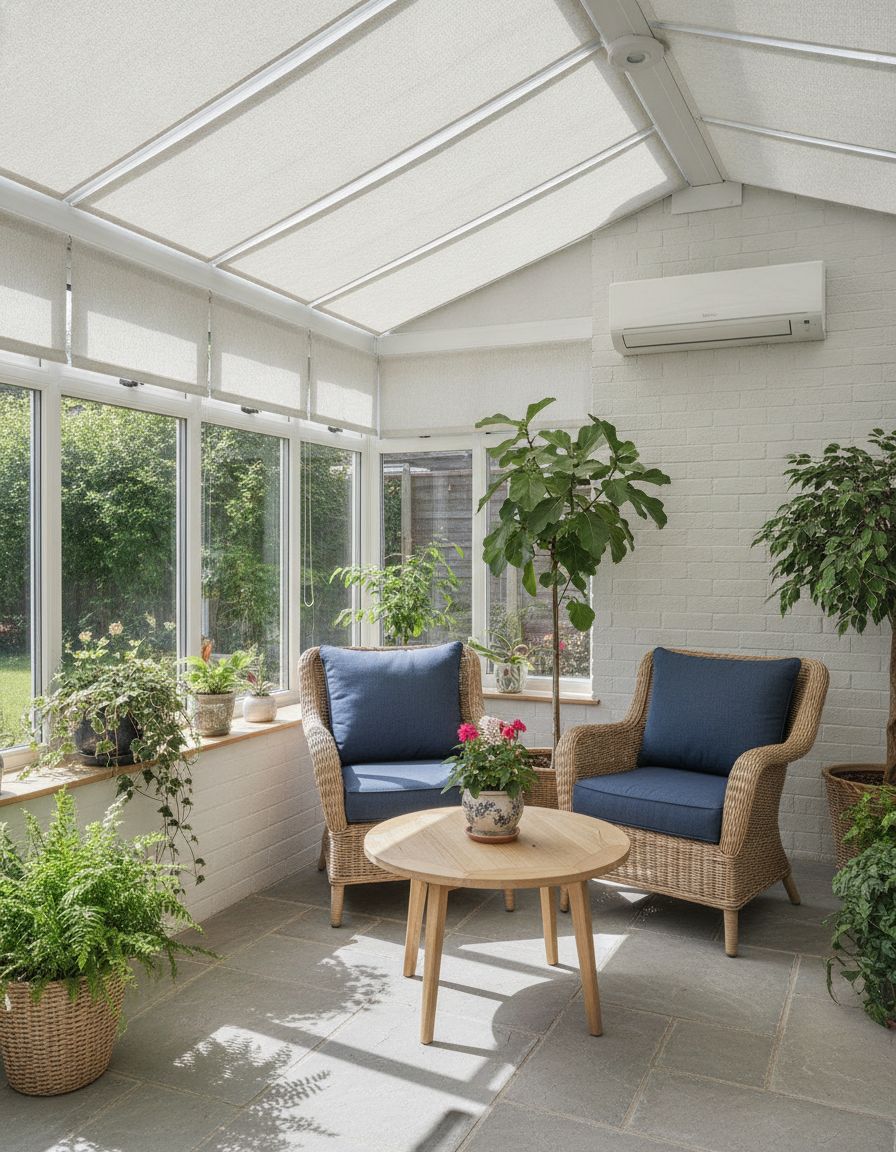
A conservatory with wicker chairs and an air conditioning unit on the brick end wall

Air-to-air heat pump

Not a separate type so much as a feature: many split systems can run in reverse to heat the room, moving heat in from outside air.

Suits
Rooms that are too hot in summer and chilly in winter, such as conservatories and garden rooms.
Worth knowing
Ask about heating when you plan the system, as it affects the model chosen.

Portable units

A self-contained unit on wheels with a hose out of a window, bought off the shelf.

Suits
A short-term fix for one room.
Worth knowing
Much noisier and less efficient than a fixed split system, and the window has to stay partly open for the hose.

What decides which type suits you

The room's shape

Sloping ceilings rule out a high wall unit on some walls; a floor console or a unit on the gable wall solves it. Large open-plan rooms may need a bigger unit or two smaller ones.

Where the outside walls are

An indoor unit on an outside wall means the pipes go straight through. Inner rooms need a longer route through a loft, cupboard or ceiling.

How much you want on show

Wall units are visible but compact. Ducted systems hide almost everything, at the cost of a more involved installation.

How many rooms

One room needs one indoor and one outdoor unit. Several rooms usually suit a multi-split, so the outside of the house stays tidy.

Questions about types of air conditioning

What is the most common type of home air conditioning?

The wall-mounted split system: one indoor unit high on a wall and one outdoor unit outside, joined through the wall. It suits most rooms and is usually the simplest to install.

Is a split system better than a portable air conditioner?

For anything beyond a short-term fix, yes. A split system is far quieter indoors, much more efficient and does not need a window left open for a hose.

Can one system cool the whole house?

A multi-split can serve several rooms from one outdoor unit, and a ducted system can serve several rooms through grilles. Which suits depends on the layout of the house.

Which type is best for a loft room?

A wall-mounted unit on a gable or knee wall often works, and a floor console suits rooms where sloping ceilings leave no space high on a wall.

Do all types of air conditioning heat as well?

Many split, multi-split, console, cassette and ducted systems are air-to-air heat pumps that can heat as well as cool, but not every model does. Check when the system is chosen.

Does every type need an outdoor unit?

Fixed systems all need an outdoor unit to get rid of heat. Only portable units avoid one, by venting hot air through a hose out of a window.

Tell us about your air conditioning

New system, service or repair: send an enquiry and we'll get back to you.